
Home / Monitoring and Evaluation / Early Childhood Development
Early Childhood Development
Pilot project on Early Childhood Development (ECD) in Punjab, in collaboration with JICA: a multi-sectoral approach to ECD through health, nutrition, education, social protection, agriculture, livestock, local government, and WASH. Activities test cost-effective and scalable interventions at the community level.
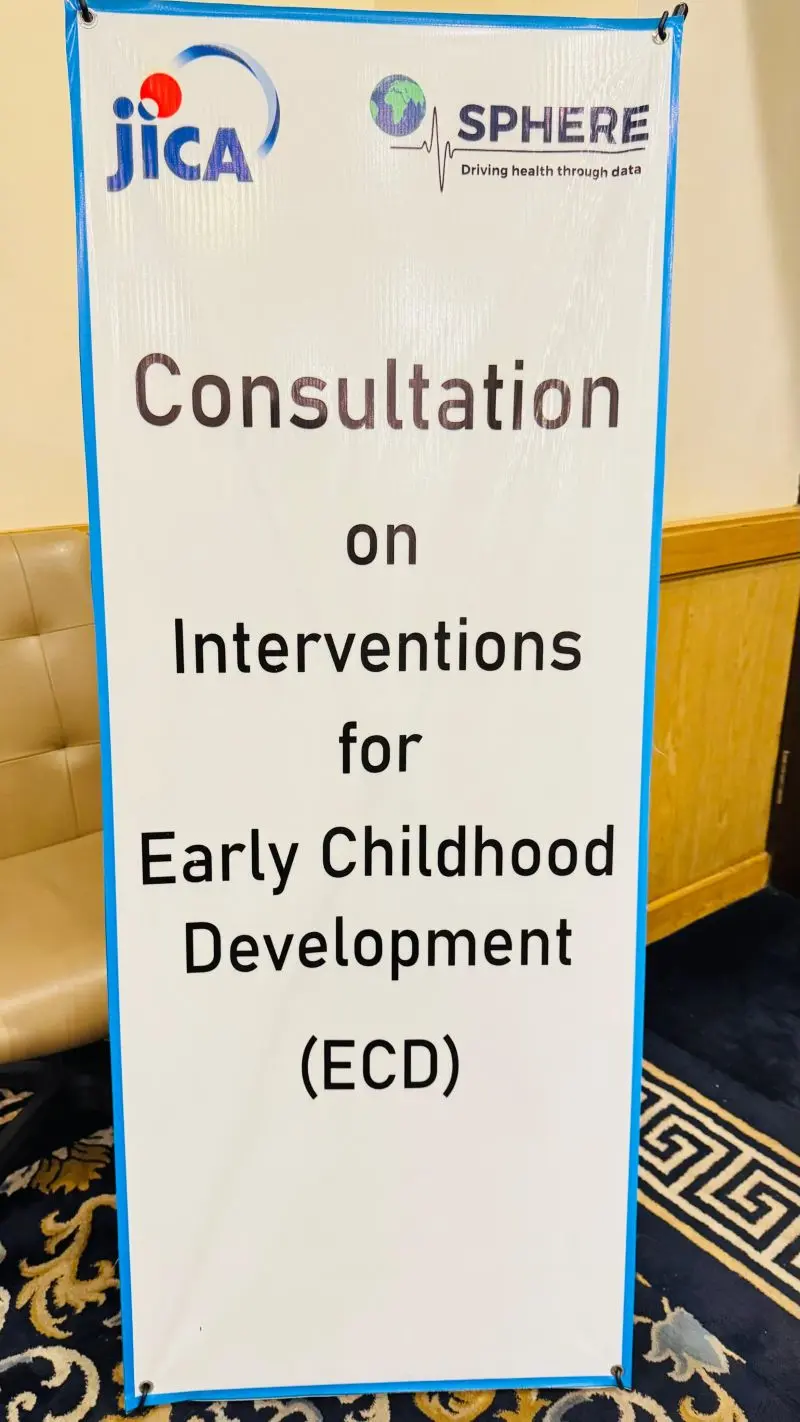
SPHERE Pakistan initiated an important dialogue on how to strengthen Early Childhood Development (ECD) in Pakistan, with support from the Japan International Cooperation Agency (JICA) in piloting a multi-sectoral approach to ECD with the Government of Punjab.
The project engaged community-level stakeholders, parents, health workers, and educators to identify practical, locally relevant solutions that foster a child-friendly environment from birth onward, bridging gaps between health, education, nutrition, and social protection sectors.
ECD is not just an education or health issue; it is a critical foundation for overall human development and a key driver in unleashing the human capital potential of a nation. The first few years of life determine long-term health, learning abilities, and productivity, making investment in this area one of the most effective ways to secure a brighter and more sustainable future for Pakistan.
SPHERE remains deeply committed to this cause, working with JICA and other partners to develop scalable and impactful models of early childhood care so that every child grows up in a safe, nurturing, and healthy environment, empowered to reach their fullest potential.
Introduction
The SPHERE Multisectoral Early Childhood Development (ECD) Project began in Union Council Kotla Chakar, Multan, with a simple idea: to give every child the chance to grow, learn, and thrive from the very start.
Community-Led Approach
What made this initiative different was that it was driven by the community itself, under the leadership of the Union Council Management Committee (UMAC). Families, parents, teachers, and local leaders all had a seat at the table, shaping the project according to their own needs and realities.
Foundation: Nurturing Care Framework
The project was built around the Nurturing Care Framework, which looks at children's development through five key areas:
Health
Nutrition
Caregiving
Early learning
Protection
Identifying Needs
Things started with a needs assessment: going door to door, talking to mothers and fathers, and listening closely to the challenges they face. Parents spoke about difficulties in accessing healthcare, the lack of safe and engaging spaces for their children, and the pressure of managing nutrition with limited resources. These conversations helped shape the way forward.
Turning Insights into Action
Local organizations were brought on board to turn these insights into action, each taking responsibility for a specific area. Interventions rolled out step by step, including:
Awareness sessions on maternal and child health
Kitchen gardening and poultry for better family diets
Upgrading schools and creating community learning spaces
Teacher training
Toy-making and positive parenting sessions
Role of UMAC
At the heart of it all was UMAC, the community's own governance body. UMAC did not just oversee the project; it drove the work, making sure it remained rooted in local realities and would not vanish once external support ended.
Impact and Legacy
This project showed how powerful things can be when communities lead the way. By bringing together families, local leaders, and service providers, children in UC Kotla Chakar are now growing up with better health, stronger learning opportunities, and more supportive care at home, laying the foundation for a brighter future.